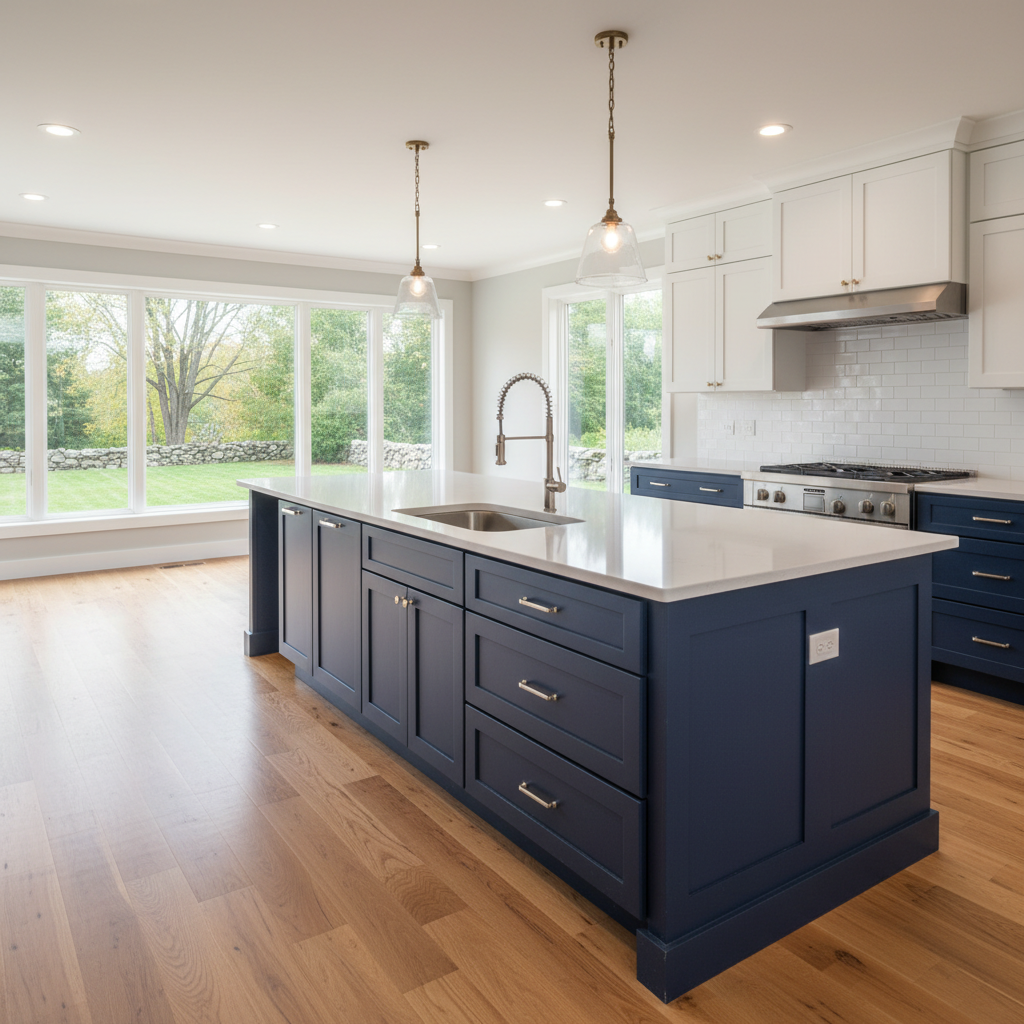
You're probably dreaming of that perfect kitchen island, right? A spot for morning coffee, homework, or just some extra counter space. It's a fantastic addition to any Waterbury kitchen, but I've seen enough projects go sideways to know there are some common mistakes folks make. You don't want an island that's more of a headache than a help, so let's talk about what to watch out for, shall we?
Ignoring the Flow: Size and Placement Are Everything
This is probably the biggest one. You see a beautiful island in a showroom or online and think, "That's it!" But your kitchen isn't a showroom. I've walked into homes in the Bunker Hill area where a homeowner tried to cram a massive island into a galley-style kitchen. It just doesn't work. You need enough clearance around all sides – at least 36 inches, but 42 inches is better, especially near appliances like your dishwasher or oven door. If you can't open your fridge or pull out your oven racks without bumping into the island, well, you've got a problem.
Think about how you actually use your kitchen. Where's your "work triangle" (sink, stove, fridge)? Your island shouldn't mess that up. It should make it better. A good contractor will help you tape out the footprint on your floor to really visualize it. Don't skip that step. It's a small effort that saves huge regrets.
Forgetting About Utilities: Power and Plumbing Aren't Optional
So, you want an island with an outlet for your mixer? Or maybe a prep sink? Great ideas! But those aren't magic. They need power and plumbing. I can't tell you how many times someone's planned out their dream island, only to realize that running electrical lines or a water supply to the middle of their kitchen floor is a major, costly undertaking. Especially in older Waterbury homes, where you might have a concrete slab foundation or a finished basement below, trenching for new lines can add thousands to your budget.
Always, always, always discuss your utility needs with your contractor early on. They can assess the feasibility and give you an accurate estimate. Trying to add a sink or power outlets last minute? That's a recipe for delays and budget blowouts.
Cutting Corners on Countertop Support
A lot of folks love the look of an overhang on their island – perfect for barstools. But if you're planning on a heavy countertop material like granite, quartz, or even a thick butcher block, that overhang needs proper support. You can't just let it float. I've seen flimsy brackets or, worse, no support at all, leading to cracking or sagging over time. It's not just about looks; it's about safety, too.
Your contractor should be talking to you about steel supports, corbels, or a full knee wall if you're going for a substantial overhang. Don't let them skimp here. A broken countertop is a costly fix, and it's completely avoidable with the right planning.
Hiring the Cheapest Bid (Without Doing Your Homework)
Look, I get it. Everyone wants a good deal. But when it comes to a big renovation like a kitchen island, the cheapest bid often comes with hidden costs or, frankly, shoddy work. I've seen homeowners hire someone who seemed like a bargain, only to have them disappear halfway through the job or do such a poor job that Alpha Kitchens gets called in to fix it.
Here's what you need to do: Get at least three bids. But don't just compare prices. Compare what's included. Ask for references and actually call them. Check their insurance and licensing. Look at their past work. A reputable contractor won't mind you asking these questions. If they get defensive, that's a huge red flag. You're inviting someone into your home to do important work; you need to trust them, right?
Ignoring Storage Needs and Functionality
An island isn't just a pretty centerpiece; it's functional. Are you planning for drawers, cabinets, open shelving, or a combination? Do you need a trash pull-out? How about a microwave drawer? Thinking about these details upfront means your island will truly serve your needs.
I've seen islands installed that look great, but then the homeowner realizes they have nowhere to put their pots and pans, or the only cabinet is too shallow for their cutting boards. Don't just focus on the top surface. Map out what you want to store in your island and make sure the design accommodates it. It's all about making your kitchen work better for *you*.
Not Considering Lighting
This one often gets overlooked until the very end. You've got your beautiful island, but now it's a dark spot in your kitchen. Proper lighting isn't just for aesthetics; it's for functionality and safety. You'll be prepping food, reading recipes, and maybe even helping kids with homework there.
Think about pendant lights above the island for task lighting and some ambient light. Make sure they're on a dimmer so you can adjust the mood. Your contractor or an electrician can help you plan the wiring for these fixtures before the ceiling gets closed up. It's much easier and cheaper to do it then than to try and add it later.
Adding a kitchen island is a fantastic investment in your home, but it needs careful planning. Don't rush into it, and don't be afraid to ask a lot of questions. Doing your homework now will save you a lot of grief and money down the road.